Some Photos From My PHILIPS 1980 Catalogue
My TECHNICS SL-P420 CLASS AA FF-1 MULTI VOLTAGE CD PLAYER 1987
Vintage Mid Level CD Player With SOALP1200 Transport And BurrBrown DAC
Multivoltage Model


The Status Series M-02 and C-02 didn't begin their lives as such : they were planned as C-400 and M-400, taking over the C-300 / M-300combo, with the styling of the L-550 for the C-400.
Both prototypes were presented at the march 1983 french Hi-Fi Fair but were revised quickly thereafter to become the M-02 and C-02, smaller siblings of the already available C-05and M-05.
Unlike the C-400 which changed a lot when becoming a C-02, the M-400 didn't change much to become the M-02 - see the Invisibilia section of TVK for the one (and only ?) image of it.
The M-02 however saw an intermediary version which landed in the catalogs as late as 1987 (!) but which wasn't produced : same design but large finish differences, better specifications and a tad more power in BTL mode, too - see Knobber images #5 and #6.
The M-02 was export-only but technically directly reminiscent of the ealier M-120A : onlynot bigger and with good old needle meters instead of flashy red LEDs.
The circuit is basically the same : Duo-ßeta,Duo-Alpha, plus-X power-supply and two Heat-Pipes.
One crucial ingredient however changed : the450VA transformer is of the round core type :R-Core - quite uncommon in 1983.
Caps were upped to 2x 15,000µF and the structure was reorganized to visibly be dual-mono, the transformer and heat-pipes in symmetry near the front plate, drivers and output stages near the back plate.
Output can rise up to 300W in mono mode (Duo-Alpha) but with only one speaker terminal for both modes instead of the two of the M-120A - still plenty enough to go deaf rapidly.
But beautifully.
The planned high-end status of the original "400" combo was well kept in the M-02 : it sold very well and owners keep them.
http://www.thevintageknob.org/luxman-M-02.html
My Pioneer SA608,TX608 set
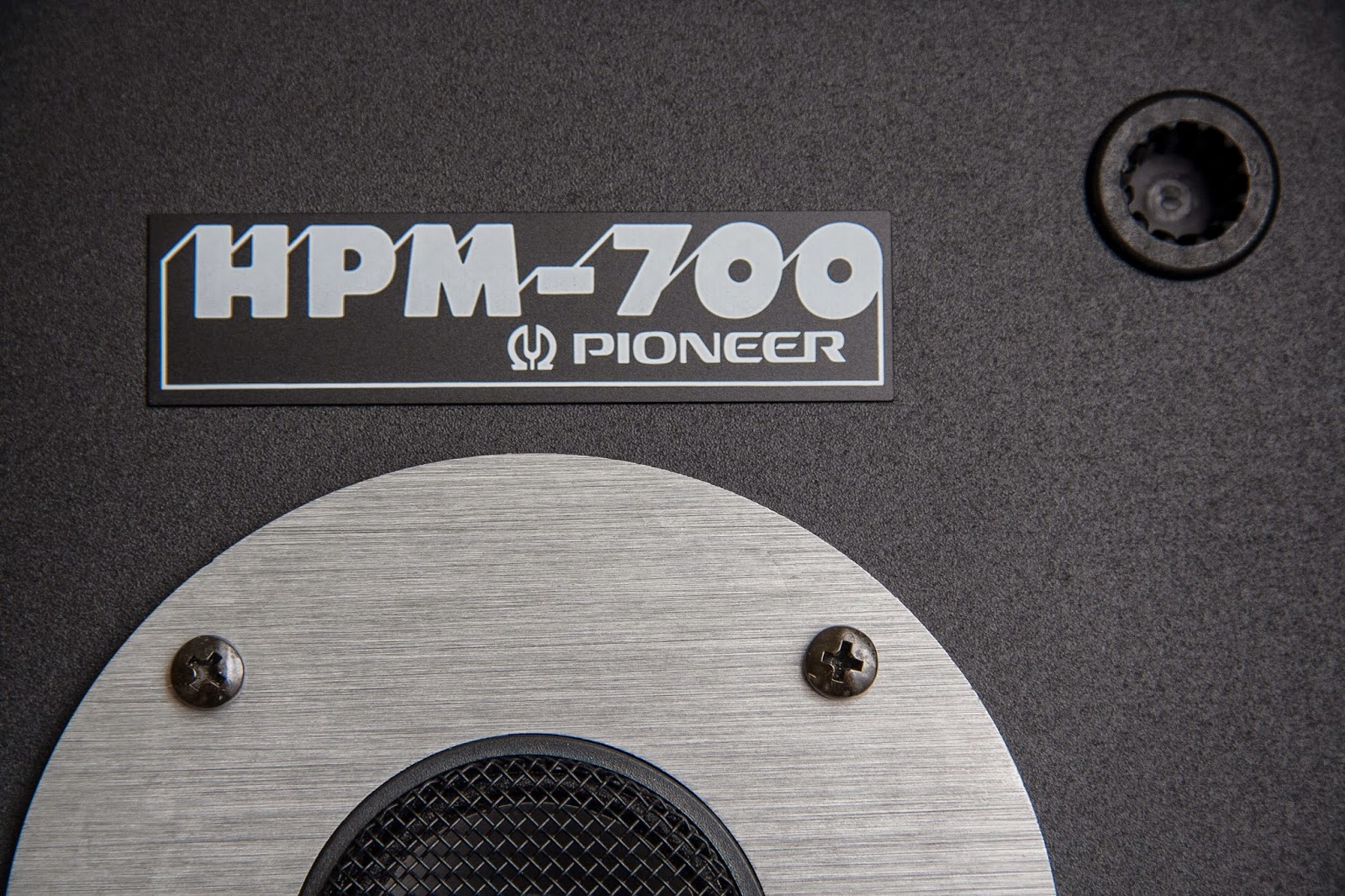
Pioneer HPM-700
The Pioneer HPM-700 is a high fidelity, 4-way, 4-speaker Bass-Reflex loudspeaker system designed by Bart Locanthi and his team of ex-JBL engineers, manufactured in Japan for the Pioneer Electronic Corporation from 1980 to 1983. Many still exist in complete working order, with all original parts, due to the speaker being engineered for endurance, reliability and longevity.
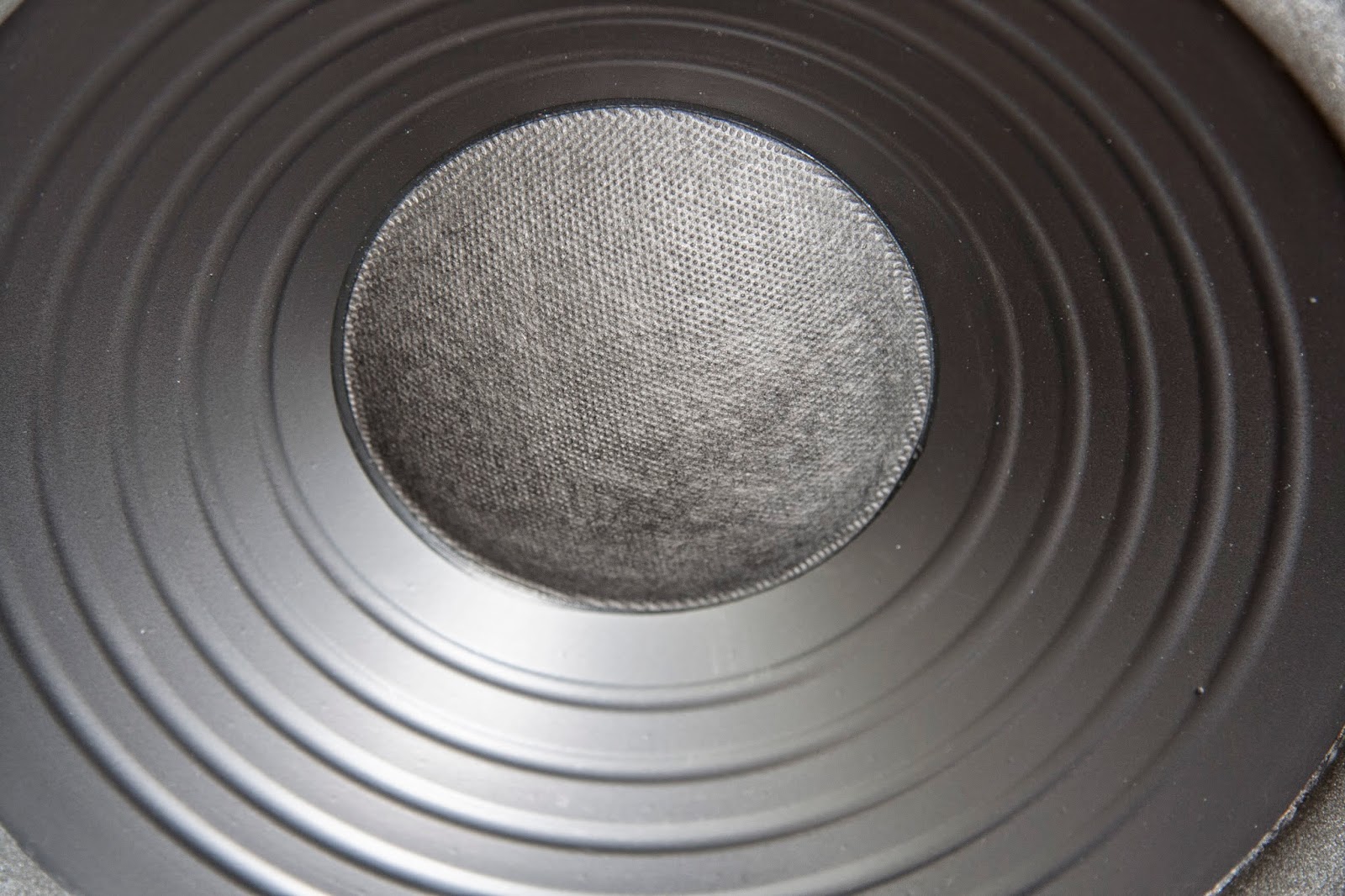
The HPM-900, were released along with the HPM-700. The HPM-700 was comparable to the HPM-60: a smaller HPM-900 with a 10 inch woofer. The tweeter and mid-range drivers on the HPM-900 and HPM-700 contained individual metal grills to protect the cones. These two speakers featured another new supertweeter design – one that more closely matched the 180 degree projection of the HPM-100. The woofers were constructed with graphite modulus – a stiffer composite material, and had foam surrounds. Also like the HPM-40 the cabinet was covered with vinyl instead of veneer
This Is my Pioneer HPM-700 speakers ,sounds very good,i want find Pioneer HPM-100 too
HPM stands for “High Polymer Molecular”, in reference to its then newly-developed high polymer molecular film supertweeter, a design that is used to convert electrical energy into sound to a degree that had previously only been theory. It is damped by elastic materials to prevent the deterioration of its best characteristics, and eliminates excessive harmonic distortion. It is housed in a plastic case, with the film (and grille) shaped semi-cylindrically in order to project the sound all 180 degrees around the front of the speaker. The HPM super-tweeter design has no dome, magnet, voice coils, or any moving parts at all. The frequency response of this driver ranges up to 25 kHz, exceeding the capacity of the human ear.
Scans From Miscellaneous Hi-Fi Magazines





.jpg)




.jpg)


